

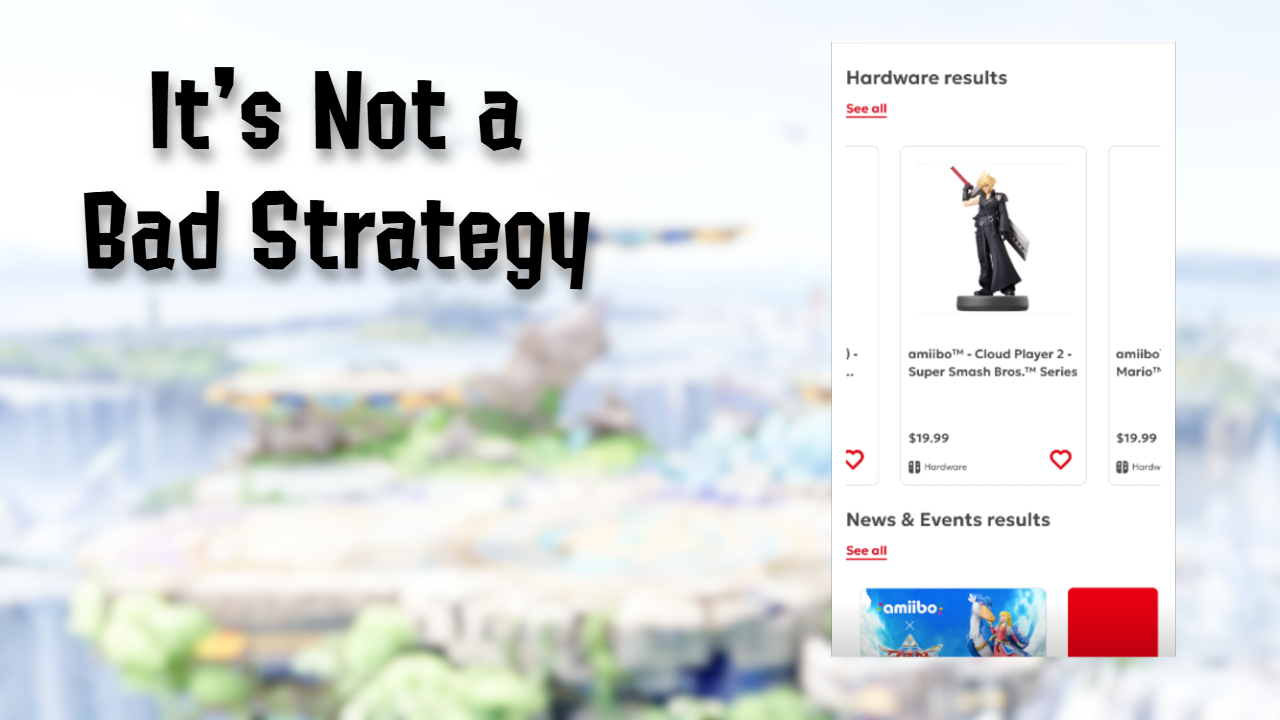
by Doc – Owner, Founder, This App Is A Great Way to Get People To Buy Formerly $13 Amiibo for $20
Nintendo has, curiously enough, released an app that provides direct access to the Nintendo Store and eShop. This release is mostly going without much fanfare, which is probably not wise on Nintendo’s part, but I do think it’s an important step for Nintendo and it’s indicative of their new philosophy.
Typically when a producer sells a product through a distributor, such as Nintendo selling a video game on the shelf of Walmart, the retailer takes a cut of the sale. The same is true if you purchase an eShop card digitally through Amazon. While it’s unclear exactly what kind of fees the retailer takes, every sale that occurs through anyone besides Nintendo’s direct storefront is money that Nintendo is not making. This is common practice in all industries in some way or another.
This strategy is also why Nintendo has more recently preferred to get away from physical cartridge sales in favor of the eShop, and is upcharging some Switch 2 titles for a physical cartridge. After all, the extra 10 bucks makes up for the fees that they’d otherwise have to pay to whoever distributes it to you. So whether you buy digital or pay the extra money for the physical cart, Nintendo wins.
Here’s the thing: Nintendo has had an online store for several years now, in an attempt to get around paying these margins, but nobody uses it in no small part because distributors currently get the best stock on collectibles and it’s largely used as a place to sell unsold inventory (at least, amiibo that don’t seem to sell have historically ended up on the store). I think this app is basically just Nintendo trying to make their processes more efficient and be less reliant on distributors, and this will solve a lot of problems for Nintendo.
What Would It Solve?
For starters, if Nintendo were hypothetically moving all of their Pokémon card sales in-house, they would have direct control of any and all anti-scalper methods that they employed. (Ditto for amiibo, though it’s been several years since amiibo were really scalped to any significant degree.) This also grants Nintendo more direct access over their consumer data, instead of having to purchase it from distributors or data vendors. It’s better for Nintendo’s demographics and data division that they know 37-year-old single, never-married males from mostly suburban areas with excess income purchased those disturbingly life-size Gardevoir plushies because then they can identify market segments through which to sell similar products down the line. Though hopefully Nintendo’s market segments aren’t that degenerate.
I guess I’m really surprised that this didn’t happen within the first two years of the Nintendo Switch. It makes a lot of sense from a business perspective, so long as Nintendo is able to produce a higher quality storefront than what the distributors currently offer.

 Amiibo Doctor