

by Doc – Owner, Founder, More Excited About Sakurai’s Ideas than Sakurai Is
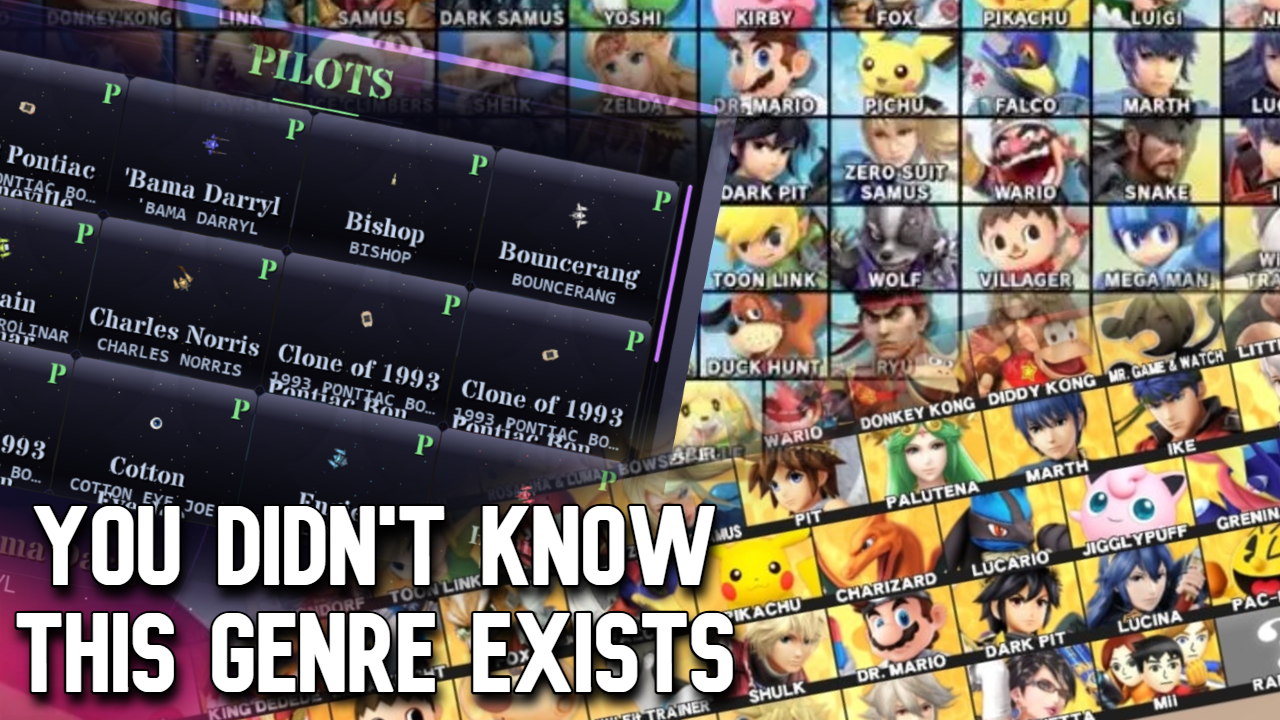
Up to this point there has been a video game genre that almost no one is aware of, yet hundreds of millions of people have likely passed by it. Embedded in the functions of Super Smash Bros. for Nintendo 3DS and Wii U, and Super Smash Bros. Ultimate is a video game genre that I am awkwardly referring to as “parameter-based auto fighting”. (Obviously if you’re a regular reader of this website, I don’t have to tell you what I’m referring to – I’m talking about amiibo training of course.) Parameter-based auto fighting is more of an accidental video game genre than it is an intentional one – it arises when a video game is fully fleshed out and designed, and within that video game users have the ability to use computer opponents against each other, and those computer opponents operate on a parameter system to determine their behavior. Or, in other words, you can influence how your computer opponent is going to fight before it does, but you’re not controlling it directly.
Amiibo training is the only instance of this to my knowledge (save for Kirby Air Riders, though technical limitations prevent us from engaging in this at an esports level). In amiibo training, you set the parameters of your amiibo by playing against it in the game. The broad philosophy is that you should play how you want your amiibo to play, though at higher levels of competition that of course does not hold as some amiibo are best trained using brain transplants (a technique I discovered all the way back in Smash 4, incidentally). Alternatively, using tools not intended by the developers you can directly edit the sliders that function as the parameters of your amiibo – if you want it to dash dance more or taunt more or parry more, you simply have to learn how the AI interprets its parameters and then adjust the appropriate sliders accordingly using those tools. It’s designed so that the game will do this on its own according to your play style, but the game can only get you so far in achieving the exact precise parameter sliders that you’d prefer.
Side note – it’s kind of funny how the only games that have experimented with this at all are Masahiro Sakurai games.
I’m writing this piece because I’d like to think out loud for a little bit about the other ways that this kind of system can be adopted. As you know, I’ve been developing my own fighting game centered around parameter-based auto fighting, and it’s specifically customized so that it can function as more of an AFK esport instead of the more involved kinds of competition that amiibo training engages in. It’s designed to have central repositories of the equivalent of amiibo (referred to as “pilots” in the game), customized stages and custom characters are fully functional and shareable as well, and there’s even a central tournament database that streamlines your ability to host and enter tournaments. I’m being very intentional to develop this as a spiritual successor to amiibo training, as I want the parameter-based auto fighting genre to survive, because it is so freaking cool.
But I think there’s other areas that you can apply parameter-based auto fighting to. Theoretically, anytime a computer opponent has to have a strategic decision or a preference for something, you could implement a slider-based parameter system or some other kind of parameter system to help make those decisions. For example, just for fun I vibe coded a little smartwatch app that is effectively a card game in a style that many old Club Penguin players would understand. If you know, you know. That’s fine and dandy, but then I implemented parameter-based decision making into the computer opponents – when the first of the five parameters is in this range, it’ll prefer playing this element, when the third of the five parameters is in that range, it’ll prefer playing power cards, you get the idea. It’s a card game, but it could still conceivably be used for a parameter-based auto fighting type of game.
Or consider the possibility of parameter-based PVE systems, where you set the sliders individually, let it run loose on a static and unchanging obstacle or series of obstacles, and further optimize for best performance. That’s not as open-ended as a fighting game is, but it’s still an interesting use of the genre.
Consider this – let’s say you’ve somehow ported the battle system and the Pit of 100 Trials from Paper Mario: The Thousand-Year Door. There’s a basic, logical AI that will not make stupid decisions like jumping on fire enemies without the correct badges but is otherwise largely up to parameter implementation. And let’s assume as well that you as the player may select your badge loadout and stat distribution. So before you begin an “Auto Mario” run, you set your badges, you set your stats, you set your parameters for decision making, and let her rip. The game will otherwise play its best according to the parameters you set for it, and we see how it goes. Gameplay like this isn’t something that the industry has really explored outside of the ever-present AFK titles that market themselves basically as fun little distractions to break up the monotony in your day. This, however, creates a more engaging experience while still allowing the user to take 2 minutes and set up a small interruption that they might actually enjoy an hour from now. It’s AFK gaming but more strategic and interesting. And there’s still an element of strategy to it as well, because if you think one or two parameters need adjusting, you can simply adjust them and see if that strategy plays out better.
When conceptualizing parameter-based game AI, it’s really more of a question of strategic fitness – do I make it prefer this strategy more often, sacrificing effectiveness early on for effectiveness later? Or do I opt for the safer option for the late game? The questions of strategy are really quite similar to strategic questions you’ll find in other games, but they’re not handled the same – instead of you being able to switch up your tactics halfway through, say, a raid, you have to plan everything out in the beginning and hope for the best. How survivable is your parameter setup for the length of the entire game? Games don’t really address that.
Amiibo training does address that, though – when you’re training for a tournament, you’re training for maximum fitness and success across as many possible opponents as possible. There are, if memory serves, 86 potential opponents in Smash Ultimate and most tournaments use up to about 6 to 10 different stages in a tournament. Additionally, your opponents will have also optimized their parameters, so how do you optimize for that? That’s strategic optimization beyond what I see in other games. Maybe there are other games out there, but I don’t know about them. I guess Auto Chess is the closest comparison.
If you’re not the kind of person who likes watching computer algorithms play out over time and respond to the emergent systems that develop, you’re probably thinking that I’m a little bit crazy. Yeah, fair enough. But man, if you are the kind of person who likes this sort of thing, I hope you stick around. When I finish this game it’s going to be awesome for the parameter-based auto fighting genre.
That’s all I’ve got for now. Let me know your thoughts in the comments.


