

by Doc – Owner, Founder, I Have Argued For Expanding the Stagelists in Amiibo Tournaments Since Day One And I Will Rest When I’m Dead
Tell somebody who plays Smash Ultimate that exactly one stage is legal in 64, and then watch their face.
Gets ’em every time. The road from “bro code says nobody touches the M Tomato” to “Dream Land, 4 stocks, 8 minutes, hold-to-pause mod” took years of tournament organizers, forum arguments, and venues. Most of it lives in old Smashboards threads, SmashWiki tournament pages, and rulebooks that eventually became a real competitive philosophy… which culminated in having one freakin’ stage. Welcome to the history of the Smash 64 stagelist and ruleset.
Disclaimer: A lot of early Smashboards threads have been archived or are not easily discoverable. This is my ol’ college try as a historian, and it relies a lot on people’s comments on the events instead of the records of the events directly. The information here might not be true.
Items On (1999-2008)
Before there was a community ruleset, there was Nintendo.
The first official Smash tournaments were Nintendo’s own Smash Bros. Fighting Battle: Smash Bros. Meijin Deciding Game (rough translation), held August 27th through 29th, 1999 at Space World in Tokyo, and they’re about as far from today’s rules as you can get.1 Roughly 10,000 people played. The qualifiers were single-elimination four-player free-for-alls with items on, trimmed down through brackets of 2,048 players to 32, then 8, then 2, who finally played a 1-on-1 stock match for the title (unknown stock count).2 On the one hand, it’s dope as hell that Nintendo had a 10,000 person tournament. That may still be the largest Smash tournament of all time if someone could verify the headcount. On the other… 4-man free for all with items?
Then the hobbyists got organized, Japan being the first (as always). SmashWiki says the Smash 64 scene wasn’t well documented in the early 2000s, with very little documentation surviving, but there were hubs: Smash World Forums (today’s Smashboards) launched in 2000 for North American players, and Japanese players had sites like Smabrer’s Garden, Sumabura-bu, and XMS.3 In March 2001, Japan United Smash Festa Round-Robin 1 packed 24 of the best players of the day into a ryokan (a traditional Japanese hotel) in Atami for three days of round robin, items on. Captain Jack and Keropi shared first, and SmashWiki calls it one of the most famous tournaments of the era. It got a Melee sequel the next year and ran as an annual series until 2005.4
That’s the pattern for the early years: round robins, free-for-alls, and items. There wasn’t really a competitive philosophy at the time. Nintendo’s official Japanese Melee events kept a four-player, two-minute, items-on format, according to Captain Jack’s blog as quoted by one history writer,5 and the Tournament Go series in California ran items on for every event except its last.6 SmashWiki’s list of historical rulesets puts the earliest major with items off at Game Over in January 2004.7 That’s a Melee tournament, not a 64 one, but Melee and 64 kinda came to the same competitive conclusions at the same time later on.
Meanwhile, 64’s North American community was going online. With emulators like Project 64k and 1964 and a netplay client called Kaillera, players could compete over the internet for the first time, setting up matches through forum sites like Emulation64 and GameFAQs.8 Players like Jim “Jimbot” Kay took on a kind of stewardship role: he put up a Geocities tutorial for getting new people online, wrote an “honor code” and took steps toward a rough standard ruleset and a pool of recognized players who could be trusted to follow it and run an emulator properly.9 One Smashboards poster pointed to a ruleset from the second raw64life tournament in 2004 (if you have the original, let me know, as I couldn’t pull the original), and other commenters stated that Jimbot’s tournaments ran with items on until item-switch cheat codes came out. According to that guy, you couldn’t pick up the Hammer, Hearts, Maxim Tomatoes, or the Star, and grabbing a Heart or Tomato meant giving up that stock unless you were at 0%. That’s one person’s memory, so chomp a grain of salt, but it’s the closest thing I found to an actual early 64 ruleset.10 It’s kind of weird that even the rules allowing items recognized some of them were unfair.
Two more fragments from this stretch. First, a Smashboards history of stock counts shows a Smash 64 match from around 2002 that was played at six stocks, and says that by about 2006 to 2007, five stocks looked like the common standard. It also names the root of the timer problem we’ll keep running into: 64 has no mode that combines stocks and a timer, a problem that has long since been fixed with mods, so matches could run unnecessarily long.11 Second, offline play was still rare. Isai and Superboomfan both got going online in 2004, and Isai flew to Japan in 2006 to challenge the best players there, where the scene had evolved much further than in North America, going so far as to only use Dream Land long before North America came to that conclusion.12 In July 2007, an MLG-sponsored tournament in South Bend, Indiana filled its 64-player bracket for 64 (per The Escapist),13 and SmashWiki separately lists Isai winning MELEE-FC Diamond that year as the first national 64 tournament in the US. I’d bet those are the same event, but I don’t know for sure. Either way, it stayed the biggest US 64 tournament for years that I can find.14
We did start to have some modern rulesets emerge. A PDF hosted on a Purdue University site that I believe dates back to this time based on my own memory lays out a 1-on-1 Smash 64 tournament whose settings : items off, 3 stocks with a 5-minute timer, best of 3, timeouts decided by stock and then percentage, and a 1-stock, 3-minute tiebreaker. It assigned a stage per round (Mushroom Kingdom, Peach’s Castle, Dream Land, Congo Jungle, and Hyrule Castle for the final), and pausing without permission cost you a stock, which you paid by jumping off the stage on purpose. Still, we can’t say definitively when it’s from.15 But it shows college organizers writing their own rules, hitting the same timer problem (one could conjure a mental image of someone holding a kitchen timer, watching the match intensely), and it fits one overview that calls 64 a college favorite.16
The sources don’t agree on when online play really got going. The Escapist and the Smashboards posts put it around 2004,17 while another community overview says a small online community developed starting around 2007.18 2004 is probably more accurate.
Before Anybody Agreed on Anything (2009-2011)
The earliest written ruleset SmashWiki points to is an “early 64 competitive recommended ruleset” from February 5, 2009, followed by the “Official 64BR Recommended Ruleset” on January 18th, 2011.19 I did get the archived copy of that 2009 thread, but it was last edited in October 2011 and carries the same ruleset text as the 2011 post, so it can’t show what the original said, and I’m not sure what the differences are. What it does show is how online the scene still was: the same thread hosted rules for an online ladder, a character “belt” challenge series, and ranked online tournaments, taking the possibility of desyncs and lag from playing on a homebrewed Wii into account. And this was a tiny scene. Apex 2010 had a Smash 64 side event, the 2012 promo post bragged that around 25 people showed up for it, and then Apex took a break in 2011 entirely.20
So the “ruleset” in this era wasn’t a law, it was a recommendation that a handful of tournament organizers could pick up, tweak, or ignore. The 64BR post says so right at the bottom, in plain English: take it, modify it as you see fit, just understand why each rule is there.21 That attitude is going to matter a lot later.
The 64BR Ruleset: Four Stages and a Coin Flip (January 2011)
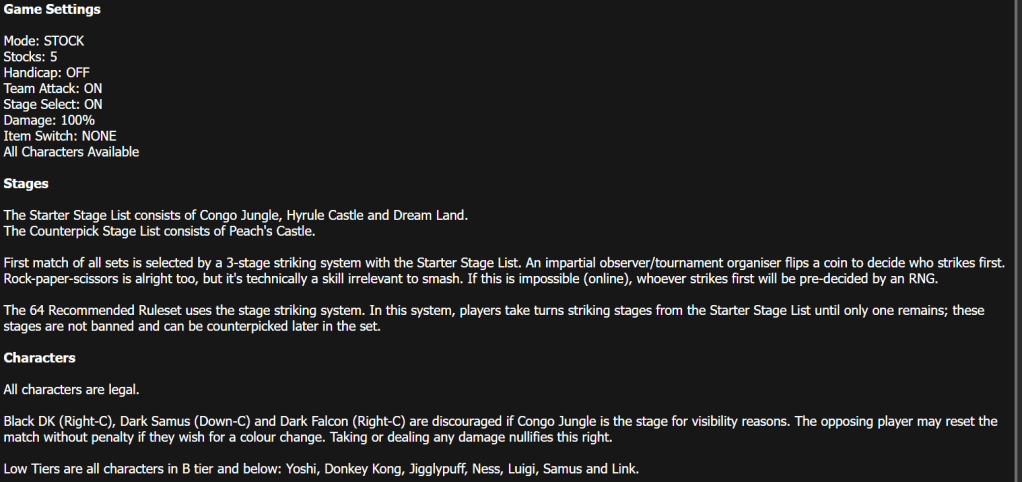
A lot of people don’t know this, but the 2011 recommended ruleset let you play on three starter stages, plus a counterpick. Basically, it looked like this:22
- Stocks and settings: 5 stocks, items off, team attack on, 100% damage, handicap off.
- Starters: Congo Jungle, Hyrule Castle, and Dream Land.
- Counterpick: Peach’s Castle. (Struck starters stayed legal as counterpicks later in the set, so you were really choosing an order, not banning anything.)
- Stage striking: a coin flip decides who strikes first, you strike the 3-stage starter list down to one, and then the loser of each game picks the next stage. After that, the winner picks their character first and the loser picks second.
- Sets: best of 3, with the later bracket rounds going best of 5 and the finals best of 7.
- Timer: an 8 or 10 minute limit was recommended, “especially Hyrule”, and the post admits that may be difficult to enforce. (The base game doesn’t give you a stock-match timer, remember. Hold that thought.)
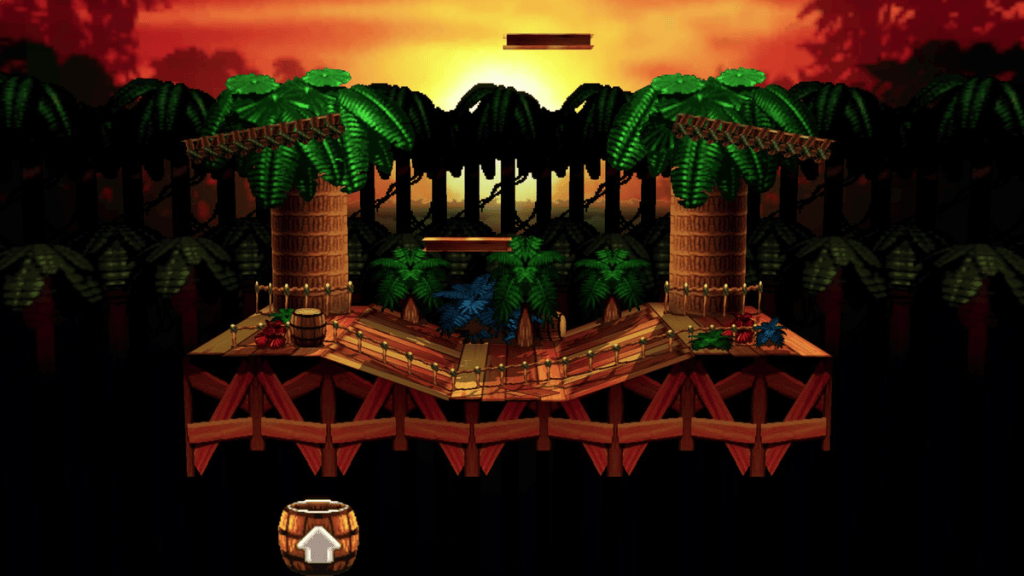
- Odds and ends: dark DK, Samus, and Falcon costumes discouraged on Congo for visibility, Gameshark stages up to the TO (the post’s actual wording is not polite), pausing discouraged with a stock penalty, and late players warned at 2 minutes, losing game one at 4, and forfeiting the set at 6.
There’s even an online section for Kaillera netplay with desync rules, which is a fun time capsule on its own. And console was already strongly recommended over a Wii or a laptop because of frame skipping.23
Apex 2012’s Final Four Stages
January 6th through 8th, 2012, in New Brunswick, New Jersey: Apex 2012,24 which SmashWiki calls the first major NTSC Smash 64 tournament.25 Entry for 64 was five bucks, the singles pot was $320,26 and the event ran the Smash 64 Backroom’s recommended ruleset basically as written, pretty well solidifying those rules as the norm. Same five-stock setup, same Congo/Hyrule/Dream Land starters, same Peach’s Castle counterpick, same 3-stage striking, same best-of-3 through best-of-7 ladder. The general rules even kept the “8/10 minute time limit … especially Hyrule” line and added that games would be played on console.27
SuPeRbOoMfAn (I hate typing that name) took singles, Isai and Nintendude took doubles.28 If you want one tournament to point at for what “pre-Dream-Land-only” looked like, this is the one SmashWiki itself points at.29
Why the Stagelist Kept Shrinking
The best window into the argument is a March 2014 Smashboards thread where one poster proposed a simplified ruleset: five stages including Hyrule and Sector Z, a coin flip instead of striking, programmable macro controllers banned, and not much else. The vote on it was lopsided (12 of 17 “mixed opinion”, one “agree completely”), and the regulars ripped it in half over its shortcomings as is Smashboards custom.30
- Match length. Big stages meant long matches, long matches meant tournaments running hours past what the venue booked, and the thread is full of stories about getting close to being thrown out. (One poster pushed back that over 400 tournament matches averaged only about a minute longer on large stages, and another answered that the sample was small and probably skewed, but still, a minute per match adds up.)31
- Hazards. Arwings and tornadoes are RNG, and people argued that anything random enough to swing a stock is something you ban, same reason items are off.32
- Camping spots. Hyrule’s top platform and left cliff, and the bottom of Sector Z, kept coming up as places where whoever was ahead could sit and force the other guy to approach. The stalling rule, meanwhile, was a mess, since nobody could agree where camping ends and stalling begins.33
Hyrule went first. SmashWiki says the American ruleset has treated Hyrule as banned since 2014, and credits a player named Bane and his “A Case Against Hyrule” thread as a major contributor.34 35 The Smash64.net FAQ adds that one infamous set was what finally sealed the ban in Peru, and that Hyrule is basically three or four stages stacked in one.36 It’s still playable under the gentleman’s rule if both players agree.37
“A Case Against Hyrule”‘s original post has been edited over to destroy its contents and is lost to time unless a Smashboards mod comes in and gives up that data, but I did read through the responses to the thread to compile a list of the points it seems that Bane made.
- Tornadoes are too random. They can appear offscreen, and the sound cue doesn’t tell you where. He also seems to have argued that a fast tornado can kill you at high percent with no way to react.
- Hyrule’s asymmetry is unfair. The left ledge and the tent make camping easy, and he preferred symmetrical stages. Hyrule is also big enough that camping becomes the logical playstyle.
- Hyrule shouldn’t get credit for the good side of tornadoes. He seems to have argued that tornadoes breaking up camping doesn’t count in Hyrule’s favor, since it’s random.
- Dream Land’s hazards are milder. He likely compared them to Hyrule’s, and the wind and bumper probably came up there. He also seems to have said the wind rarely saves anyone from a shieldbreak.
- Tournament conditions make the sound cue worse. Audio is usually poor or quiet, so the stereo cue is unreliable in practice.
Dream Land Emerges Victorious
It wasn’t long before Hyrule fell.
By January 30th through February 1st, 2015, the Apex 2015 rulebook (last revised December 31st, 2014) had Dream Land as the only starter in singles, with Congo Jungle and Peach’s Castle as counterpicks, still 5 stocks, and team attack on for doubles. No Hyrule in singles, which lines up with the established 2014 ban. Doubles was more generous, with Hyrule and Congo added as doubles-only starters (Hyrule wasn’t a counterpick in either format). A new “stage clause,” the old Dave’s Stupid Rule* came into enforcement as well. The rulebook also gives no time limit for 64 at all, unlike the 8 minutes it lists for Melee and Brawl. And a lot of it already reads like today’s rules: the stalling rule’s wording about “excessive unwillingness to engage the opponent” is nearly the same as the one in use now, pausing was only legal on your own respawn platform to call a TO or for a controller malfunction (anything else cost you a stock), and there was already a colorblind rule, a 30-second warm-up cap, and the same timeout tiebreaker. Late players, though, were disqualified after 5 minutes instead of today’s 15.38
*Dave’s Stupid Rule is the rule that you can’t pick a stage you already won on
Then came mid-to-late 2015, and this is where my sources disagree a little. SmashWiki says all stages outside Dream Land were banned in mid-to-late 2015 after a collective effort by tournament organizers and members of the Backroom.39 The Smash64.net FAQ says the community has been basically Dream Land-only since Congo Jungle and Peach’s Castle were banned at Super Smash Con 2015.40 Those two stories fit together fine (a gradual community push that got finalized at a big event), but I couldn’t find a single dated source that says “here, on this day, this happened.”
The reasons the FAQ gives for the last two stages are… straightforward. Peach’s Castle has no ledges, which makes recovering on it brutal for most of the cast, and it mostly got used as an easy counterpick by Pikachu and Kirby players. Top tiers are fine without it, believe me. Congo Jungle, per the FAQ, was banned because nobody liked it, and it had turned into a gimmick pick for catching opponents unfamiliar with it.41 The reasons SmashWiki lists against Congo include platforms that are too high for some characters.42
Everything That Isn’t a Stage
The stagelist gets all the attention, but the other rules shifted too, and some of them shifted more quietly. Here’s the before-and-after as best I can reconstruct it:43
| Rule | 2011-2012 (64BR / Apex 2012) | Now (per Smash64.net archives) |
|---|---|---|
| Stocks | 5 | 4 |
| Timer | 8/10 minutes recommended, hard to enforce | 8 minutes, all games |
| Items / team attack | Off / on | Off / on |
| Pausing | Discouraged, pauser loses a stock (two if it costs the opponent theirs) | Hold-to-pause enabled; pause only on your own respawn platform, to call a TO or for a controller malfunction |
| Stalling | Warning, then forfeit | Forfeit or DQ at the TO’s discretion |
| Late to a match | 2 / 4 / 6 minute warning, game loss, set loss | 15 minutes past start, DQ (exact timer up to the TO) |
| Costumes | Dark DK/Samus/Falcon discouraged on Congo | Only natural costumes; colorblind clause |
| Tied timeout | Draws decided by stock, then percentage | Stock, then percentage, then a 1-stock tiebreaker; in-game sudden death ignored |
I know stocks were 5 through at least Apex 2015, and the current standard rules say 4, but I never found a source that says when that changed.44 Second, the move to an enforced 8-minute timer is basically a story about mods (we’ll get there), since the original cartridge doesn’t give you a timer in stock mode. Even Apex 2015’s rulebook gave Melee and Brawl 8 minutes but left 64 without a limit.45 And third, SmashWiki lists sets as best of 3 with top 8 going best of 5, and notes the Waterfall bracket, which became popular around 2017 and has been used at most majors since. (Apex 2015 had already dropped the best-of-7 finals, going best of 5 from winners semifinals on.)46
Controllers: From “Bring Your Own Adapter” to a Button Count
The controller rules started out relaxed, probably because 64 was only playable on the hombrewed Wii and the Nintendo 64. The 2011 recommendation says that if you want to use a GameCube controller, you can use a Wii running the Virtual Console version or a PC adapter, and if you want a keyboard or any non-Nintendo controller, you get a laptop setup and you’re responsible for bringing your own adapters and drivers on a USB stick and calibrating them yourself.47 The 2014 simplification thread put the whole thing in one line, banning programmable controllers, macros, and rapid fire, which are standard rulesets for all Smash games these days. I find it interesting that you were allowed to just bring your own stuff, including laptop setup. Apex 2015 followed the same spirit: alternate or custom controllers and adapters were allowed, and anyone suspected of using turbo functions or other macros was subject to immediate disqualification.48 Console was still preferred, and the Wii’s Virtual Console version is disliked for frame skipping, but y’know, when everyone has a Wii and Smash 64 is $20 on it you make do. Japan bans the Virtual Console version outright over that and its incompatibility with N64 controllers, those bloody purists.49
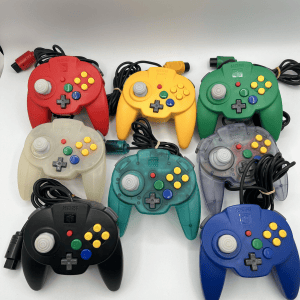
The hardware story on its own is interesting. The Hori Mini Pad, a Japan-only controller with the stick on the left, two Z buttons, and a D-pad down below, is widely considered superior to the official N64 pad and a tournament standard, according to SmashWiki, though the Smash64.net FAQ says most top players still used some form of the original pad.50 Japan-to-America merch exchange services hadn’t become commonplace yet, certainly not until COVID, so I imagine these controllers were in short supply.
Today’s rule actually uses a button count, and it’s worth reading closely because it’s the cause of most of the confusion people have about keyboards and box controllers:51
- Button counts can’t exceed a Hori Mini Pad’s: one each of A, B, L, R, and Start, two Z buttons, four C buttons.
- The stick is either one joystick or four digital buttons for the cardinal directions. Mixing the two is out.
- No macros, including any Melee-esque“C-stick” that combines a stick input with an attack, and nothing that isn’t a 1:1 mapping to a button on an original N64 pad or Hori.
- No angle modifiers or tilt keys, which is the Melee-box-controller trick.
- Everything else is up to the TO, and breaking these gets you disqualified with all your earlier wins forfeited.
The FAQ explains the intent: limit controllers to what the officially licensed pads of the era could do.52 The original N64 pad, the Hori, a GameCube controller, and a keyboard or other wired device all count as legal as long as they fit under those limits. (Yes, GameCube controllers were legal; they had to be, as Smash 64 was often played on the Wii Virtual Console). As for hardware mods like stick swaps or notches, I couldn’t find a Smash 64-specific list, so the general Smash rule applies: mods are fine if they don’t do anything a person couldn’t do with hands, and it’s the TO’s call.53 (Outside North America it’s murkier. SmashWiki says Japan bans controllers outside traditional N64 ones at most events, Horis included, but the Smash64.net FAQ says there’s no written rule against Horis there, only a strong preference for the original pad. I couldn’t resolve that.)54
What are the Rules of Competitive Smash 64 Today?
Basically,…
Game settings
- Stage: Dream Land only
- Stocks: 4
- Timer: 8 minutes
- Items: off
- Team attack: on
- Hold-to-pause: on
Timeouts and stalling
- If time runs out, the player with more stocks wins. If stocks are tied, the lower percentage wins.
- If stocks and percentage are both tied, or both players lose their last stock at the same time, you play a 1-stock tiebreaker on a 2-minute timer (8 minutes divided by 4 stocks).
- The game’s built-in sudden death is ignored.
- “Excessive unwillingness to engage the opponent” can get you forced to forfeit by the TO. If neither player is moving, the one who’s losing is considered the one stalling.
- If both players are tied and stalling, both can be disqualified at the TO’s discretion.
Pausing
- You can only pause while on your own respawn platform, and only to call a TO or for a controller malfunction.
- You have to tell your opponent before you pause.
- Any other pause forfeits the game.
- Events without hold-to-pause may use a more lenient version of this rule.
Match rules
- Only natural costumes are allowed. A player who refuses to play natural costumes loses a full game.
- Colorblind clause: you can ask your opponent to change colors, but you have to ask before the match starts.
- Warm-ups and controller tests are capped at 30 seconds.
- You have 60 seconds to counterpick a stage after a loss.
- Coaching is allowed between games for 30 seconds, one coach per player, and the coach has to be named before the match.
- Players being 15 minutes late can be disqualified, and the exact time is up to the TO.
Doubles
- You can take your partner’s stock.
- You can’t swap controllers with your partner.
- You can’t replace a missing teammate with a CPU.
- Two Pikachus on one team aren’t allowed, though the rules say this varies by tournament.
Controllers
- No more buttons than a Hori Mini Pad: one each of A, B, L, R and Start, two Z, and four C.
- The stick is either one joystick or four directional buttons, not both.
- No macros, including “C-sticks” that combine a stick input with an attack, and nothing that isn’t a 1:1 button mapping.
- No angle modifiers or tilt keys, such as the ones on box controllers.
- Breaking these rules gets you disqualified, and your earlier wins in the event are forfeited.
- Legal examples include the original N64 pad, the Hori, a GameCube controller, and other wired devices that fit these limits.
19XX and Smash Remix: The Mods That Changed the Rules
Remember that timer problem? That’s where 19XXTE comes in, circa May 2015. It’s a ROM hack based on 20XX Tournament Edition, a popular Melee mod, and its whole job is to make running tournaments easier. The headline feature is a timer for stock matches, so a TO doesn’t have to track match time on that oven timer, plus hold-start-for-half-a-second to pause, which fixes the “I mashed pause while trying to DI” disaster.55 It was notably used at Genesis 3 and Super Smash Con 2016, and the last version is 1.6 from 2021. The extra features of its sibling 19XXCE were later folded into Smash Remix.56
That’s why the current rules can say “8-minute timer” and “hold-to-pause enabled” when that’s not in the vanilla game. (The SmashWiki ruleset page even says the timer is “preferably” 8 minutes if 19XX or another mod is usable, which tells you it still isn’t universal.)57 It’s weird to think about, but at this point the Smash 64 community had decided to effectively adopt a fanmade version of Smash 64 instead the actual Smash 64 game.
Smash Remix pushed things further, since it can add stages. Wind-free Dream Land clones like Fray’s Stage are legal at some events,58 and some online tournaments in 2021 (Frame Perfect Series 5, Quarantined 3, a European winter tourney) put Remix’s Smashville, Yoshi’s Story, and Pokémon Stadium on the list.59 It’s a different game of stage-list politics entirely, and I’d keep an eye on it.
What About Doubles?
Doubles has always been weird, and it kept more stages than singles for longer. At Apex 2015, Congo Jungle and Hyrule Castle were still starters in doubles even though singles had dropped Hyrule.60 Genesis 6 ran a Pikachu-and-Kirby-banned bracket on Congo, Hyrule, Peach’s Castle, and a modded Yoshi’s Island with the off-stage clouds removed. Regional events sometimes allowed Final Destination, Dream Land clones, or Remix stages, though SmashWiki notes that has gotten less common since around 2020.61
The other doubles quirks, as best I can tell:
- Team attack is on and stealing stocks from your partner is legal. The current rules also forbid swapping controllers with your teammate (the “grab and go” clause) and replacing a missing teammate with a CPU.62
- Pikachu and Kirby dominate, which led to ZPK (Zero Pikachu or Kirby) and SPK (Single Pikachu or Kirby) formats. People jokingly call normal doubles “DPK” because Double Pikachu is such a common team. The current standard rules ban two Pikachus on a team, though they note that varies by tournament.63
- Lag is a real concern. Overclocked N64s are preferred because regular consoles lag in doubles, and some events lean on lighter 19XX stages or an offline emulator setup to dodge it.64
- Port priority matters, so events often set teams as P1 and P4 against P2 and P3. (Apex 2015’s Dream Land setup was different, alternating teams as P1 and P3 against P2 and P4, so this has shifted along the way.)65
Footnotes
- SmashWiki, Smash Bros. Fighting Battle: Smash Bros. Meijin Deciding Game: dates (August 27th-29th, 1999), venue (Space World, Tokyo), and the page’s statement that these were the first official Smash Bros. tournaments. ↩︎
- Same SmashWiki page: the qualifier format, the 10,000 participants, brackets of 2,048 players cut down to 32, then 8, then 2 players in a 1-on-1 stock match. The page does not give the stock count. The 10,000 figure is SmashWiki’s; the guess that this may be the largest Smash tournament ever is the author’s and is not sourced. ↩︎
- SmashWiki, Super Smash Bros. (64) in competitive play, section "2000s: Small Beginnings": a small scene with little surviving documentation, Smash World Forums founded in 2000, and the Japanese sites Smabrer’s Garden, Sumabura-bu, and XMS. Note: Wikipedia’s Smashboards article says the site was founded in 2002, so the founding year is disputed. ↩︎
- SmashWiki, Japan United Smash Festa Round-Robin 1: March 26th-28th, 2001, Atami, 24 entrants, round robin with items on, held over three days in a ryokan, Captain Jack and Keropi- listed as winners, called one of the most famous tournaments of the era, with a Melee sequel the next year and an annual series until 2005. ↩︎
- Anokh Palakurthi, Smash History: The Early Ages (2001-2003), which quotes Captain Jack’s website on Japan’s official Melee events using a four-player, two-minute, items-on ruleset. ↩︎
- Liquipedia, Tournament Go: every Tournament Go event except Tournament Go 6 used items. ↩︎
- SmashWiki, Historical rulesets: lists Game Over (January 10th, 2004) as the earliest major with items off. It is a Melee event. The claim that Melee and 64 reached similar conclusions around the same time is the author’s own and is not sourced here. ↩︎
- SmashWiki, Super Smash Bros. (64) in competitive play: netplay tournaments using emulators such as Project 64k and 1964, organized through sites such as Emulation64 and GameFAQs. ↩︎
- Matt Gerardi, Inside the Secret World of Competitive Smash 64, The Escapist: Kaillera, and Jim "Jimbot" Kay’s Geocities tutorial, honor code, and rough standard ruleset. ↩︎
- Smashboards, Smash History: one poster points to a 2004 ruleset for the second raw64life tournament, and another recalls from memory the item rules in Jimbot’s tournaments. Both are unverified recollections, and I could not retrieve the original ruleset. ↩︎
- Smashboards, Smash History: Stock Counts In Smash: a Smash 64 match from around 2002 at six stocks, five stocks common by roughly 2006-2007, and the lack of a mode combining stocks and a timer. The mod fix mentioned here is covered in the 19XX section (notes 55-57). ↩︎
- The Escapist article: Isai and Superboomfan both started on netplay in 2004, and Isai traveled to Japan in 2006 and found its scene much more developed. ↩︎
- The Escapist article: a July 2007 MLG-sponsored tournament in South Bend, Indiana filled its 64-player bracket for 64, the largest American 64 competition for several years. ↩︎
- SmashWiki, Super Smash Bros. (64) in competitive play: Isai won FC Diamond in 2007, called the first national 64 tournament in the US. I did not confirm that FC Diamond and the South Bend event are the same tournament. ↩︎
- Smash 64 tournament rules PDF hosted on a Purdue site: settings, stage-per-round list, and pause penalty as described. I saw only part of the document and could not date it. ↩︎
- AlphaZealot, The History of Competitive Smash, Smashboards: calls Smash 64 a college favorite, with college tournaments of 20-40 entrants. ↩︎
- The Escapist article (netplay from 2004, Jimbot’s tournaments) and the Smashboards Smash History thread (online tournaments around 2003-2005). ↩︎
- AlphaZealot’s overview: says a way to play online was figured out starting around 2007, after which a small community developed. ↩︎
- SmashWiki, Historical rulesets, lists the May 2nd, 2009 ruleset (archived copy) and The Official 64BR Recommended Ruleset (January 18th, 2011). I read the archived thread (Competitive Rules Index, by Smash 64 Backroom moderator Surri-Sama). It was last edited October 18th, 2011, and its ruleset text matches the 2011 64BR post (5 stocks, Congo/Hyrule/Dream Land starters, Peach’s counterpick, 3-stage striking), so it does not show what the 2009 version said. Its earliest replies are dated February 7th, 2009, which does not line up with SmashWiki’s May 2nd date, and I could not reconcile the two. Besides the ruleset, the thread carries rules for an online ladder (capped at 15 players), a character "belt" challenge series, and ranked online tournaments of 16 entrants. ↩︎
- SmashWiki, Tournament:Apex: the series list (Apex 2009, 2010, 2012, 2013 and so on, with no 2011) and a note that Smash 64 was a side event in 2010. Wikipedia, Apex (tournament): 22 Smash 64 singles entrants in 2010. Alex Strife’s Apex 2012 SSB64 Event thread: "25 people last time" plus the previous event’s results. The SmashWiki Apex 2012 page calls it the third Apex tournament, which fits. ↩︎
- The Official 64BR Recommended Ruleset, closing note: organizers are encouraged to modify the ruleset while understanding the reasoning behind each recommendation. ↩︎
- The Official 64BR Recommended Ruleset: settings, stages, striking, set lengths, timer recommendation, costume note, Gameshark stages, pausing penalty, and late-player penalties. The Apex 2012 thread carries the same rules text. ↩︎
- 64BR ruleset thread: the online (Kaillera) section, and the recommendation of console over a Wii or laptop because of frame skipping. ↩︎
- SmashWiki, Tournament:Apex 2012: January 6th-8th, 2012, Rutgers University Student Center, New Brunswick, New Jersey. ↩︎
- SmashWiki, Tournament rulesets (SSB), external links: Apex 2012 is labeled the first major 64 NTSC tournament. ↩︎
- SmashWiki Apex 2012 page: Smash 64 entry fee of $5 and a singles pot of $320. ↩︎
- SmashWiki Apex 2012 page, ruleset section: it used the Smash 64 Backroom’s recommended ruleset, with the settings, stage lists, 3-stage striking, set lengths, 8/10 minute time limit, and the console rule as described. ↩︎
- SmashWiki Apex 2012 page, results: SuPeRbOoMfAn won singles; Isai and Nintendude won doubles. ↩︎
- SmashWiki, Tournament rulesets (SSB), points to Apex 2012 as an example of a "pre-backroom" ruleset, although the Apex 2012 page itself says the event used the Backroom’s recommended ruleset. SmashWiki is inconsistent here. ↩︎
- Smashboards, Tournament Rules: Super Smash Bros 64: posted March 16th, 2014; the proposed simplified ruleset (five stages, coin flip, programmable controllers banned); a poll of 17 votes (1 agree completely, 12 mixed, 2 disagree, 2 no opinion); and the replies. ↩︎
- Same Smashboards thread: the match-length and venue-time discussion, including a claim that over 400 matches averaged about a minute longer and a reply that the sample was small and flawed. ↩︎
- Same thread, and SmashWiki, Stage legality (Sector Z and Hyrule Castle hazards). ↩︎
- Same thread, and SmashWiki Stage legality and Hyrule Castle (camping on the top platform and tent; Great Fox fin on Sector Z). ↩︎
- SmashWiki, Hyrule Castle, tournament legality: banned in the American Smash 64 ruleset as of 2014, with Bane credited as a significant contributor. SmashWiki’s profile of Bane (satdaddy) says he created the thread. ↩︎
- Bane’s Smashboards thread, A Case Against Hyrule, as linked from the SmashWiki Hyrule Castle page. Smashboards blocked my attempt to open it, so I have not read it. ↩︎
- Smash64.net FAQ: the Superboomfan vs Gerson set that "finally resulted" in the ban in Peru, and Hyrule being "essentially 3 or 4 stages in one." SmashWiki’s Hyrule Castle page separately describes Peru’s ruleset treating Hyrule as the main stage until Boom’s trip to Tacna. ↩︎
- SmashWiki, Hyrule Castle: the Gentleman’s Rule lets players agree to use it. ↩︎
- Apex 2015 Official Rulebook (last revised December 31st, 2014), read in full by way of the author’s copy of the PDF text. Section III (Smash 64) and the general Smash rules: 5 stocks; Dreamland as the only singles starter; Hyrule Castle and Congo Jungle as doubles-only starters; Peach’s Castle and Congo Jungle as counterpicks; Team Attack on for doubles; a Stage Clause (no counterpicking a stage you already won on); no time limit listed for 64, while Melee and Brawl list 8 minutes; the stalling rule; pausing legal only on your own respawn platform to call a TO or for a controller malfunction, with other pauses costing a stock (two if it costs the opponent theirs); the colorblind rule and 30-second warm-up cap (both added December 31st, 2014); the timeout and 1-stock tiebreaker rule; a 5-minute tardiness DQ; and best of 3 with best of 5 from winners semifinals on in the final bracket. The rulebook’s section on controllers is quoted in note 48 and its neutral-start table in note 65. SmashWiki’s Apex 2015 page and Liquipedia’s Apex 2015 Smash 64 page added nothing useful. SmashWiki’s table also labels the Congo counterpick "singles only," which the rulebook does not say. ↩︎
- SmashWiki, Tournament rulesets (SSB): the mid/late 2015 statement that all stages outside Dream Land were banned after a collective effort by TOs and Backroom members. ↩︎
- Smash64.net FAQ: Dream Land only since Congo Jungle and Peach’s Castle were banned at Super Smash Con 2015, "although Japanese tournaments had been using the ruleset before that point." ↩︎
- Smash64.net FAQ: the reasons given for banning Peach’s Castle and Congo Jungle. ↩︎
- SmashWiki, Stage legality (reasons listed for Congo Jungle, including platforms too high, poor lighting, and no ledge DI; and for Peach’s Castle, no grabbable edges) and Hyrule Castle (Dream Land as the only neutral stage in the Japanese ruleset). ↩︎
- Left column: the 64BR thread and the Apex 2012 rules. Right column: Smash64.net’s standard North American ruleset, adapted from SuperNova 2026. ↩︎
- Five stocks at Apex 2015: confirmed in the Apex 2015 rulebook (note 38). Four stocks now: the Smash64.net rules. ↩︎
- Smashboards, Smash History: Stock Counts In Smash: Smash 64 lacks a mode with both stocks and a timer. The Apex 2015 rulebook lists an 8-minute limit for Melee and Brawl but none for 64 (note 38). ↩︎
- SmashWiki, Tournament rulesets (SSB) (set lengths and the Waterfall Bracket section), and What is a Waterfall Bracket? The Apex 2015 rulebook (note 38) has best of 5 from winners semifinals on in the final bracket, with no best-of-7 sets. ↩︎
- The 64BR thread: the 2011 controller and hardware recommendations. ↩︎
- The 2014 Smashboards rules thread: bans programmable controllers, macros, and rapid fire. The Apex 2015 rulebook (note 38), controllers rule: alternate or custom controllers and adapters are allowed, and players suspected of using turbo functions or other macros are subject to immediate disqualification from the tournament. ↩︎
- SmashWiki, Tournament rulesets (SSB) (console recommended over a Wii because of frame skipping) and Tournament legal (DSB), the Japanese ruleset: the Virtual Console version is banned over frame skipping and incompatibility with N64 controllers. ↩︎
- SmashWiki, Hori Mini Pad: Japan-only release, stick on the left, two Z buttons, D-pad at the bottom, widely considered superior to the official pad and a tournament standard. Smash64.net FAQ: although the Hori has seen high-level play for years, the majority of top players use some form of the original pad. ↩︎
- Smash64.net rules: the controller rules, in the Hori Mini Pad button-count form given here. ↩︎
- Smash64.net FAQ: the reasoning for capping controllers at what licensed pads could do. ↩︎
- SmashWiki, Controller modification, "Legality": mods are generally legal if they do not do something an average human could not, and there is no unanimously accepted list, so it is up to the TO. That is a general Smash rule, not Smash 64-specific. ↩︎
- SmashWiki, Tournament rulesets (SSB): in certain other regions, including Japan at most events, controllers outside traditional N64 ones (including Horis) are banned. The Smash64.net FAQ disagrees: it says there is no written rule against Horis in Japanese tournaments, only a general preference for the original pad. The sources conflict. ↩︎
- SmashWiki, 19XXTE: a mod based on 20XX Tournament Edition, development starting in May 2015, a timer for stock matches, and hold-start-for-0.5-seconds to pause. ↩︎
- SmashWiki 19XXTE page: notable use at Genesis 3 and Super Smash Con 2016, version 1.6 released in 2021, and all features of the 19XXCE variant later folded into Smash Remix. ↩︎
- SmashWiki, Tournament rulesets (SSB): the hold-to-pause feature in 19XX and Smash Remix, and the timer being preferably 8 minutes if 19XX or another mod is usable. ↩︎
- SmashWiki, Stage legality (Smash Remix stages and wind-free Dream Land versions) and Tournament rulesets (SSB) (Fray’s Stage legal at some tournaments). ↩︎
- Frame Perfect Series 5: ONLINE, Quarantined 3, and the European Winter Tourney, as listed on SmashWiki’s Tournament rulesets (SSB) page. Smashville, Yoshi’s Story, and Pokemon Stadium are named there as the most common choices. ↩︎
- Apex 2015 official rulebook (note 38): Hyrule Castle and Congo Jungle listed as doubles-only starters alongside Dreamland. ↩︎
- SmashWiki, Tournament rulesets (SSB), 2-on-2: the Genesis 6 stage list, other stages at regionals, and the note that this has become less common since 2020. ↩︎
- Team attack and stock stealing: SmashWiki Tournament rulesets (SSB), 2-on-2. The controller-swap ("Grab and Go") and missing-teammate/CPU rules: the doubles section of Smash64.net’s rules. ↩︎
- SmashWiki Tournament rulesets (SSB), 2-on-2: ZPK, SPK, and DPK. The two-Pikachu limit and the note that it varies by tournament: Smash64.net’s rules. ↩︎
- SmashWiki Tournament rulesets (SSB), 2-on-2: overclocked N64s, lighter 19XX stages, and offline emulator setups. ↩︎
- SmashWiki Tournament rulesets (SSB), 2-on-2: port setups of P1 and P4 against P2 and P3. The Smash64.net rules’ Neutral Start table uses the same doubles layout. The Apex 2015 rulebook’s neutral-start table (note 38) lists Dreamland doubles as Team A in ports 1 and 3 and Team B in ports 2 and 4. ↩︎


